AI Music in Education: Benefits, Limits, and Best Practices for 2026
AI Music for Education: Benefits, Limits, and Best Practices
Introduction
In 2026, AI music in education has become one of the most dynamic intersections between technology and pedagogy. As digital classrooms evolve and educational technology advances, teachers are no longer restricted to static learning materials. Instead, music—once an art form confined to specialized study—has become a versatile learning aid powered by artificial intelligence. From personalized soundtracks that aid memory retention to hands-on music theory assistants, AI is changing the rhythm of how students learn and how educators teach.
This article explores the benefits, limitations, and best practices of using AI-generated music in classrooms. It also highlights how tools like Soundverse Agent, a conversational AI music assistant, empower educators to integrate music-based learning into their curriculum.
What are the benefits of AI music in education?

AI music brings cognitive, emotional, and creative benefits to modern classrooms. Here are the most impactful ways it's reshaping learning environments in 2026:
1. Enhancing engagement through interactive sound
Students today engage better with learning audio that aligns with their emotional states. AI systems can dynamically generate background soundscapes for lessons—transforming reading comprehension sessions into immersive experiences. A math problem may be paired with subtle rhythmic loops, while history lessons come alive with orchestral arrangements inspired by the era being studied.
2. Supporting music-based learning
AI can adapt music styles and tempos to match different learning outcomes. For instance, upbeat tunes can support energizing classroom activities, while slow harmonies can enhance focus. This type of music-based learning resonates deeply with kinesthetic and auditory learners, helping them associate musical cues with conceptual understanding.
3. Personalizing education with adaptive learning audio
Every student's brain processes information differently. AI-generated music can be tailored to suit personal learning preferences—creating unique learning audio tracks that respond to pace, mood, and comprehension level. This personalization supports inclusive education across various cognitive abilities.
4. Fostering digital creativity in classrooms
By incorporating digital creativity in classrooms, educators encourage students to explore music production concepts without needing expensive equipment. AI simplifies tasks that traditionally required deep technical knowledge—allowing students to experiment with beat-making, instrumentation, and arrangement using only text prompts.
5. Bridging the gap between STEM and arts (STEAM)
Modern education emphasizes STEAM—where arts integrate with science and technology. AI music fosters this convergence by teaching principles such as frequency modulation, waveform synthesis, and algorithmic reasoning in creative contexts. Students learn both the science behind sound and the art of its expression.
For a deeper dive into the creative use of AI tools, watch our tutorial on how to make music or explore the “Explore” Tab walkthrough from the Soundverse Tutorial Series.
What are the limitations of using AI music in education?

While the benefits are striking, it’s important to acknowledge the limitations and ethical considerations around AI music.
1. Creativity vs automation
A central debate is whether automation hinders genuine creativity. AI can replicate stylistic patterns and generate music efficiently, but over-reliance may limit the development of critical musical thinking. According to Carnegie Mellon University research, even though AI can compose coherent pieces, humans still lead in creativity and emotional nuance. Educators must balance tools that assist with those that challenge students to think creatively.
2. Data bias and cultural sensitivity
AI systems learn from large datasets. If not curated carefully, these datasets might reflect cultural or stylistic biases. For global classrooms, this may inadvertently marginalize certain traditions or musical forms. Ethical frameworks must ensure inclusivity and diversity, as discussed by Lee’s article in Arts Education Policy Review.
3. Intellectual property and copyright challenges
Even with ethical AI music frameworks, teachers must navigate licensing and attribution. When music is generated by AI, questions about ownership arise—who truly owns the output? Implementing transparent and consent-based infrastructures, like Soundverse’s Ethical AI Music Framework, ensures fair recognition and remuneration.
4. Limited emotional depth
AI music excels in structural and aesthetic coherence but still struggles to replicate authentic human improvisation or emotional nuance. It may not replace the depth of live performance or human connection in music education.
5. Technical accessibility
Not all schools have equal access to the computational power or stable internet required for AI tools. This digital divide can hinder widespread adoption, particularly in developing educational systems.
What are the best practices for integrating AI music into the classroom?
Educators experimenting with AI-powered teaching tools can follow best practices to ensure effective, ethical, and engaging use:
- Align music creation with learning objectives. Use AI-generated compositions as supportive elements, not distractions. For example, generate calm melodies for reading comprehension or dynamic beats for group projects.
- Encourage critical analysis of AI outputs. Let students evaluate why the AI produced specific melodies or rhythms, fostering critical digital literacy.
- Integrate creative assignments. Have students design music for narratives or science projects using AI tools, turning lessons into cross-disciplinary projects.
- Respect intellectual property ethics. Teach students about attribution, transparency, and consent, following frameworks like Soundverse’s Ethical AI Music Framework.
- Iterate and reflect. Regularly adapt lesson plans based on how students respond to AI integration. Collect feedback to improve future sessions.
How does AI music foster emotional learning and cognitive retention?
Music is a powerful emotional regulator. In education, emotion plays a vital role in memory encoding and recall. AI music applications utilize sound psychology to enhance retention:
- Sound cues reinforce memory. Associating a specific melody with a concept helps students recall information faster.
- Rhythmic learning supports sequencing. Subjects like language learning or coding benefit from rhythm-based reinforcement.
- AI-generated mindfulness music improves student focus, useful during exams or transitions between lessons.
Numerous educators cite improvements in classroom energy levels and concentration when adopting AI-adapted sound design, creating emotionally resonant learning spaces. For additional context, explore research on music education and AI literacy.
How to make AI music for education with Soundverse Agent

Soundverse Agent is a conversational AI music assistant designed to transform abstract ideas into music through natural language. For educators and edtech creators, it acts as a bridge between creativity and accessibility.
What makes Soundverse Agent unique?
- Multi-step tool orchestration: Orchestrates music generation, editing, and extension automatically.
- Contextual memory: Remembers past prompts, enabling ongoing lesson-wide music creation workflows.
- Voice input support: Teachers can communicate naturally, simply saying “create a relaxing study melody for reading comprehension.”
- Cross-tool automation: Integrates seamlessly with other Soundverse tools for comprehensive educational workflows.
Soundverse Agent enables interactive music theory learning. For example, students can explore chord structure by asking the assistant to “remove drums” or “add a C major chord.” It encourages exploration without intimidating technical barriers. For educators who prefer visual learning, check out our Soundverse tutorial on creating Deep House music.
For deeper applications, educators can also explore:
These resources show how the platform supports both creativity and ethical learning.
Integration Example
Imagine an educator teaching world history. Using Soundverse Agent, they could say:
“Create an instrumental background inspired by 18th-century European classical music without vocals.” Within minutes, Soundverse returns an original composition suitable for a presentation or lecture. The same session could evolve: “Now remove percussion and add a harp-inspired intro.” The conversational memory ensures continuity, making lesson content adaptive and fluid.
How ethical frameworks ensure responsible AI use
AI’s growing influence in classrooms raises valid concerns about authorship, consent, and artist compensation. Soundverse’s Ethical AI Music Framework answers these challenges with transparency. This six-stage pipeline ensures data used to train AI models comes from artists who’ve given explicit consent, and that they receive recurring compensation when their styles inform generated music. Educators adopting AI music should always select tools built on similar principles to maintain ethical integrity in their institutions.
Bring AI Music into Your Classroom Today
Empower students to explore sound, creativity, and technology with Soundverse’s AI music generation tools. Create engaging educational projects with ease—no music theory background required.
Start Creating with Soundverse
Related Articles
- The Role of AI Music in Film and Television: Explore how AI is shaping the soundtrack of modern visual storytelling and what it teaches us about creativity and technology.
- AI Music Generator and Human Composers: A Future Together: Discover how collaboration between human creativity and AI tools is redefining the art of music composition.
- How AI-Generated Music is Transforming the Music Industry: Learn how AI innovations are changing how music is created, distributed, and taught in today’s digital era.
- AI Music in the USA: Get insights into how the U.S. education and music landscapes are integrating AI to foster new forms of creativity.
Here's how to make AI Music with Soundverse
Video Guide
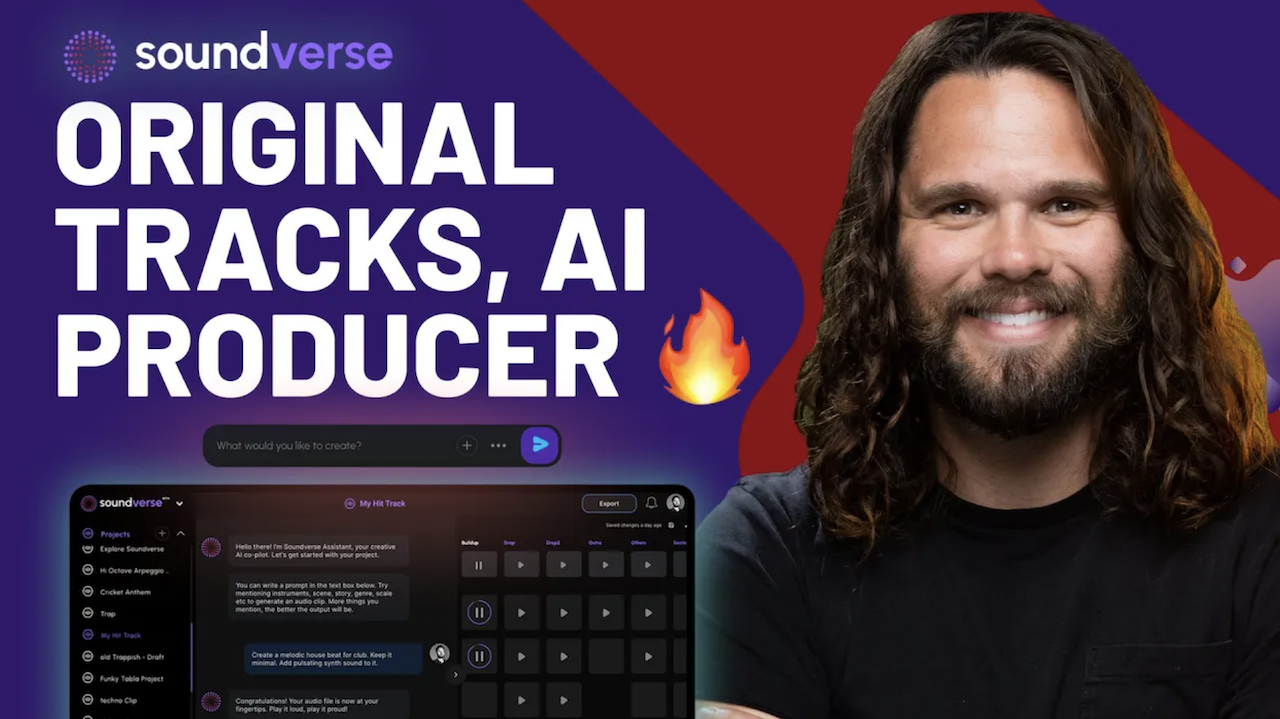 Here’s another long walkthrough of how to use Soundverse AI.
Text Guide
- To know more about AI Magic Tools, check here.
- To know more about Soundverse Assistant, check here.
- To know more about Arrangement Studio, check here.
Soundverse is an AI Assistant that allows content creators and music makers to create original content in a flash using Generative AI. With the help of Soundverse Assistant and AI Magic Tools, our users get an unfair advantage over other creators to create audio and music content quickly, easily and cheaply. Soundverse Assistant is your ultimate music companion. You simply speak to the assistant to get your stuff done. The more you speak to it, the more it starts understanding you and your goals. AI Magic Tools help convert your creative dreams into tangible music and audio. Use AI Magic Tools such as text to music, stem separation, or lyrics generation to realise your content dreams faster. Soundverse is here to take music production to the next level. We're not just a digital audio workstation (DAW) competing with Ableton or Logic, we're building a completely new paradigm of easy and conversational content creation.
TikTok: https://www.tiktok.com/@soundverse.ai
Twitter: https://twitter.com/soundverse_ai
Instagram: https://www.instagram.com/soundverse.ai
LinkedIn: https://www.linkedin.com/company/soundverseai
Youtube: https://www.youtube.com/@SoundverseAI
Facebook: https://www.facebook.com/profile.php?id=100095674445607
Join Soundverse for Free and make Viral AI Music
 We are constantly building more product experiences. Keep checking our Blog to stay updated about them!