AI Music Dynamics and Expression Limitations: Exploring the Depths of Creative Range in 2026
AI Music Dynamics and Expression Limitations
Artificial intelligence has been steadily reshaping the music landscape for several years, and by 2026, its influence has evolved from novelty to necessity. As more producers and AI developers adopt intelligent composition systems, the conversation has shifted toward depth and realism — specifically, how algorithms handle AI music dynamics and expression quality. What once felt mechanical now strives for emotional authenticity, dynamic range, and musical nuance that mirrors the intricacy of human performance. But how close have we truly come to bridging that expressive gap?
What are AI music dynamics and why do they matter in 2026?
Dynamics in music refer to volume variations, intensity, and expressive contrast — the subtle changes that turn notes into emotion. In human performances, the control of dynamics is intuitive. A singer softens their tone during a tender phrase; a drummer delicately eases the snare to create suspense. Translating these nuances into code is a daunting challenge, and AI music dynamics have become a benchmark for measuring the quality of generated compositions.
By 2026, developers are no longer satisfied with AI systems that merely follow amplitude envelopes or rhythmic patterns. The demand has grown for systems capable of interpreting emotional context, environment cues, and genre-specific variations. In this context, AI music dynamics are no longer about loud or quiet — they encompass expressive slope, tempo drift, harmonic tension, and perceptual realism.
How has expression quality evolved in AI-generated music since 2024?
Between 2024 and 2025, AI music models primarily focused on structural accuracy — chords, melodies, and rhythm generation. The main challenge then was coherence. In 2026, however, the emphasis is shifting to expression quality, which includes subtle phrasing and the emotional fingerprint behind every note.
AI systems now evaluate waveform contours, transient response, and micro-temporal variations to improve timbre realism. For music producers, this translates to AI-generated stems that feel performative rather than programmed. For engineers, it opens possibilities for dynamic mastering tailored around expressive routing, a concept discussed in Soundverse's article on stem separation tools.
Still, limitations persist. Expression quality in AI compositions often lags when multiple emotional states collide — such as excitement and melancholy in a single track — where human improvisation naturally excels. Research teams in 2026 continue to tackle this with neural layering techniques that integrate artist-style DNA, making generation more adaptive to context. As of 2026, platforms like Soundverse have advanced far beyond early audio AI models from 2024. Modern composition systems now integrate context-aware emotion mapping as described in How Do AI Music Generators Work in 2026?.
What restricts the dynamic range and nuance in AI music generation?
Dynamic range defines how softly or powerfully an AI system can convey musical ideas. While modern models handle decibel variances smoothly, the challenge comes from musical nuance — those near-invisible fluctuations that shape realism. In many AI compositions, the transitions between dynamic states feel linear because the system averages emotional data rather than interpreting intention.
The cause often lies in limited training datasets. When models learn from synthetic sources, they capture structure but not sentiment. This is why artist-trained platforms have become crucial for regaining expressive depth. The influence of personal artistry provides a real-world gradient to the machine’s perception of dynamics.
Such limitations affect genre sensitivity too. For example, jazz improvisations depend on interaction-based dynamics, while cinematic music demands sweeping crescendos tied to narrative tension. Unless the AI incorporates context-driven modulation, dynamic range flattens into predictable patterns.
To see how dynamic modeling evolves across genres, readers can explore content like AI-generated Jazz music or EDM production techniques, which highlight adaptive workflow integrations. For a deeper dive, watch our guide on creating Deep House music or How to Make Music tutorial from the Soundverse YouTube channel.
How do AI systems interpret emotional nuance in music?
Understanding emotional nuance is the essence of human music-making. AI interprets this through data correlation — inferring that softer volumes or slower tempos equate to sadness, and higher energy suggests joy. However, emotional expression cannot be reduced to intensity variables alone. By 2026, advanced models attempt to embed semantic emotional mapping, blending symbolic music theory with perceptual listening datasets.
Some neural architectures now analyze limbic patterns extracted from listener response data, improving emotion transfer quality. Yet, despite these achievements, AI still struggles to create genuine unpredictability — that human decision to play ‘against’ the rulebook. Musical nuance, therefore, remains an elusive frontier for algorithmic creativity.
Articles such as how AI-generated music transforms the industry showcase the broader implications of this continuous evolution. External analyses like AI & Music Tech In 2026 indicate that creativity remains the most widespread producer concern, highlighting this issue from a practical standpoint.
How to make expressive AI music with Soundverse DNA
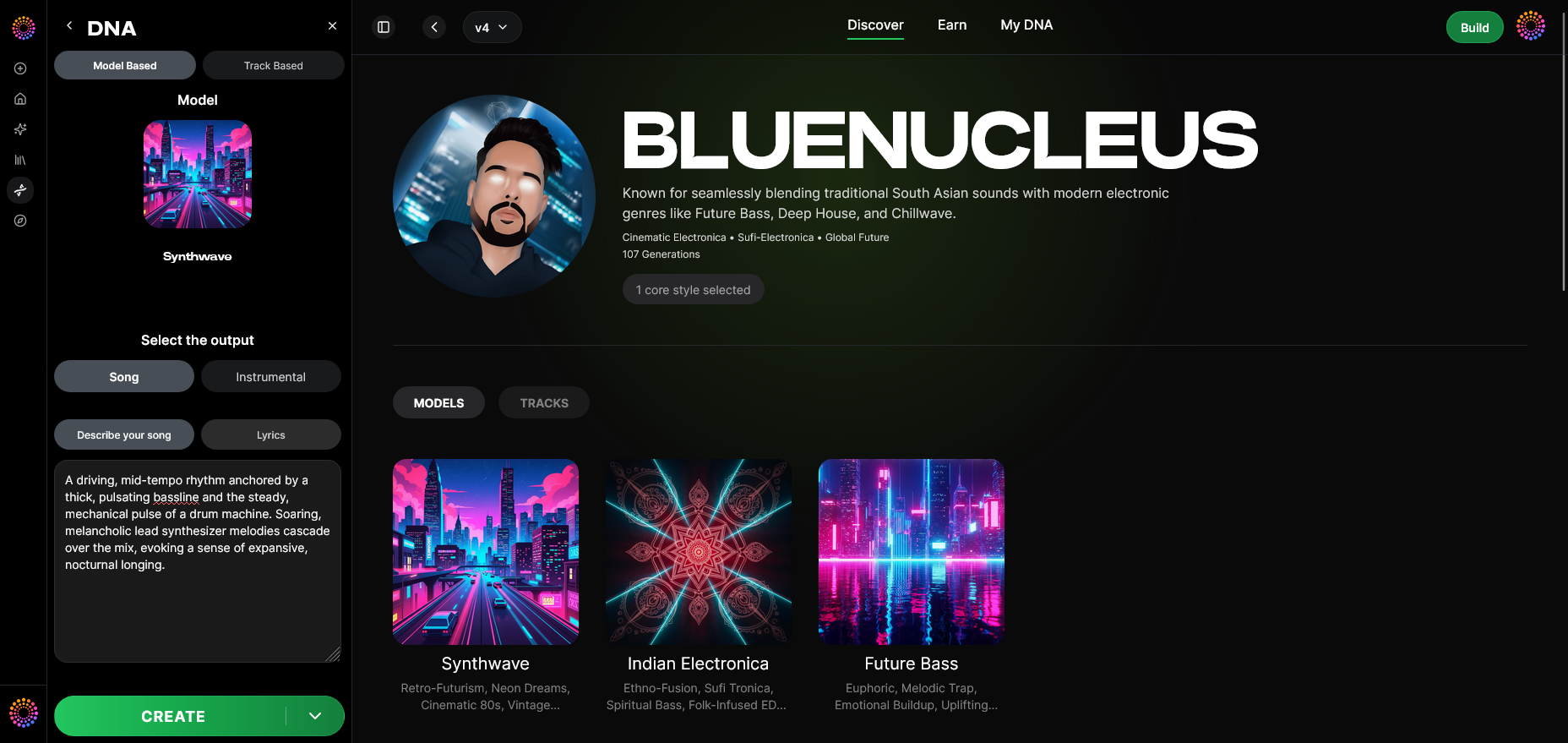
Soundverse’s Soundverse DNA feature represents one of the strongest contributions to overcoming AI music dynamic and expression limitations. It is an artist-trained AI system capable of generating original music built upon specific sonic identities while maintaining ethical and legal integrity. By training exclusively on licensed catalogs, Soundverse allows creators to monetize their performance style through its DNA Marketplace while users generate copyright-safe tracks that retain an authentic expressive feel.
Core Capabilities of Soundverse DNA
- Full DNA (Songs/Instrumentals): Enables entire song generation with artist-level detail, preserving natural dynamics and phrasing.
- Voice DNA: Focuses on vocal timbre and stylistic interpretation, ideal for projects that require expressive delivery.
- DNA Marketplace: Permits artists to license their style safely to others, merging monetization with fan engagement.
- Sensitivity Selector: Segments catalog data into eras or emotional cluster points, helping the AI tailor dynamic responses.
- Private Mode: Provides secure collaboration, ensuring creative DNA remains within professional boundaries.
How Soundverse DNA Enhances AI Music Dynamics
Soundverse’s sensitivity control allows users to manage expressive depth. Rather than linear dynamic gradients, the AI interprets historical artist data clusters to emulate emotional growth within the piece. This means that a Soundverse DNA model can produce a guitar solo that crescendos naturally, or a vocal timbre that subtly shifts tone as the lyrical emotion progresses.
For music producers and engineers, this feature resolves a critical issue: generative music that lacks human feeling. With Soundverse DNA, dynamic range feels analog rather than algorithmic, and musical nuance aligns with genuine storytelling. The innovation aligns with observations from AI Music Creation 2026: Hybrid Workflows for Composers, where hybrid models are central to expressive synthesis approaches.
Workflow Examples and Integration Possibilities
Producers can combine Soundverse DNA with other creative tools like the AI Singing Generator and Similar Song Generator to refine expression control further. These companion tools help maintain tonal balance while extending the range of unique timbres. In fact, experiments with cross-model layering can yield strikingly organic results — for instance, applying Voice DNA to reinterpret a melody made with the Similar Song Generator.
For further inspiration, review guides such as how to create AI music or how an AI music generator inspires creative fusion. These demonstrate how Soundverse technologies enhance creative workflows and mitigate expression constraints. What Will 2026 Hold for AI Music Releases? also highlights licensing changes and institutional shifts driving adaptive expression models.
What challenges still remain for expressive modeling in 2026?
Despite significant progress, the gap between AI precision and human intuition persists. Systems often misinterpret artistic restraint as underperformance and emotional exaggeration as noise distortion. As expressive AI improves, some researchers advocate hybrid collaboration — where producers feed minimal manual edits guiding the AI’s dynamic intent. Such co-creation enables musicians to maintain agency while benefiting from automation.
Furthermore, establishing standard metrics for expression quality remains complex. Evaluating nuance requires perceptual analysis rather than mathematical scoring. Thus, algorithmic benchmarking now integrates 'listener empathy modeling,' a trending method introduced in 2026 music cognition research communities. Music and AI: 2025's developments that will shape 2026's disputes explains how copyright questions and emotional evaluation standards continue to evolve within this field.
Experience True AI Music Dynamics with Soundverse
Unlock expressive, high-quality sound powered by intelligent algorithms that adapt to your creative flow. Turn your ideas into emotionally rich music in minutes.
- How AI-Generated Music Is Transforming the Music Industry — Discover how AI-driven tools are revolutionizing the creative process for modern musicians.
- The Role of AI Music in Film and Television — Explore how AI music generation brings cinematic storytelling to life with adaptive dynamics and emotion.
- AI Music Generator and Human Composers: A Future Together — Learn how AI tools complement human creativity and enhance musical expression.
- How an AI Music Generator Inspires Creative Fusion — Uncover how technology empowers artists to blend imagination with innovation for unique compositions.
Here's how to make AI Music with Soundverse
Video Guide
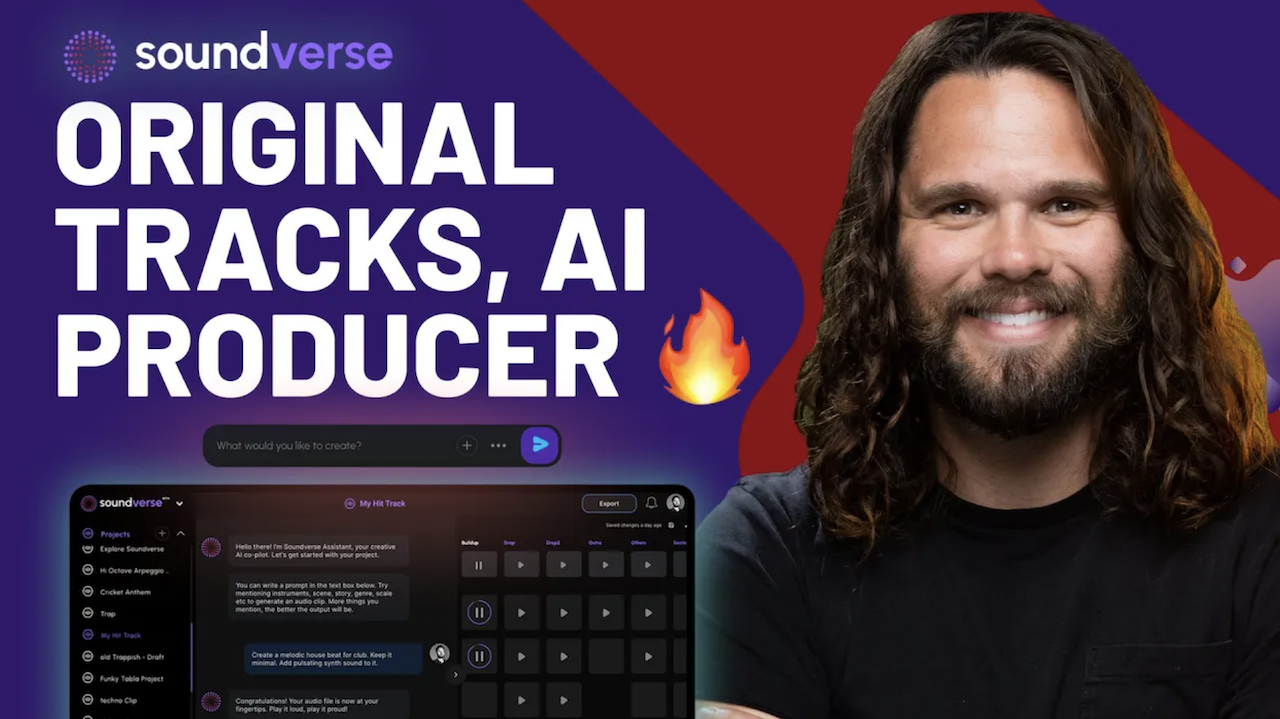
Here’s another long walkthrough of how to use Soundverse AI.
Text Guide
- To know more about AI Magic Tools, check here.
- To know more about Soundverse Assistant, check here.
- To know more about Arrangement Studio, check here.
Soundverse is an AI Assistant that allows content creators and music makers to create original content in a flash using Generative AI. With the help of Soundverse Assistant and AI Magic Tools, our users get an unfair advantage over other creators to create audio and music content quickly, easily and cheaply. Soundverse Assistant is your ultimate music companion. You simply speak to the assistant to get your stuff done. The more you speak to it, the more it starts understanding you and your goals. AI Magic Tools help convert your creative dreams into tangible music and audio. Use AI Magic Tools such as text to music, stem separation, or lyrics generation to realise your content dreams faster. Soundverse is here to take music production to the next level. We're not just a digital audio workstation (DAW) competing with Ableton or Logic, we're building a completely new paradigm of easy and conversational content creation.
TikTok: https://www.tiktok.com/@soundverse.ai Twitter: https://twitter.com/soundverse_ai Instagram: https://www.instagram.com/soundverse.ai LinkedIn: https://www.linkedin.com/company/soundverseai Youtube: https://www.youtube.com/@SoundverseAI Facebook: https://www.facebook.com/profile.php?id=100095674445607
Join Soundverse for Free and make Viral AI Music

We are constantly building more product experiences. Keep checking our Blog to stay updated about them!